Buyers in Central and Eastern European markets (Poland, Czech Republic, Slovakia, Hungary, Romania, the Baltic states, northern Germany and the Balkans) operate in climatic conditions that constrain their ornamental plant specifications. Zone 4 and Zone 5 cold hardiness is not a marketing claim to attach to catalogue descriptions: it is a practical threshold that determines whether a plant will establish and perform in the landscape, or fail to overwinter after the first hard frost.
Vivai Reali produces cold-hardy ornamental plants in Pistoia, Italy, the primary ornamental plant production district in Europe, for bulk export to B2B buyers across the European market, including the Central and Eastern European region.
Cold Hardiness as a Selection Criterion: What the Zones Mean
USDA plant hardiness zones are a standard reference framework for cold tolerance: they define the minimum average annual temperature a plant will survive. For buyers in Central and Eastern Europe:
- Zone 2 (-46°C): Arctic regions of Finland, Norway, northern Russia
- Zone 3 (-40°C): Northern Poland, Scandinavia, Baltic states interior
- Zone 4 (-34°C): Most of Poland, Baltic states, inland Czech Republic, northern Romania
- Zone 5 (-26°C): Southern Poland, Czech Republic, Slovakia, Hungary, southern Germany, northern Italy
- Zone 6 (-23°C): Hungary, Romania, Austria, Slovenia, most of Germany
- Zone 7 (-18°C): Southern Romania, Croatia, milder urban environments in Central Europe
The most commercially significant cold hardiness threshold for Central European B2B buyers is Zone 4–6: the range that covers the majority of the high-volume ornamental plant markets in the region.
Cold-Hardy Species Available in Bulk from Vivai Reali
Zone 2–3 Species (-46°C to -40°C)
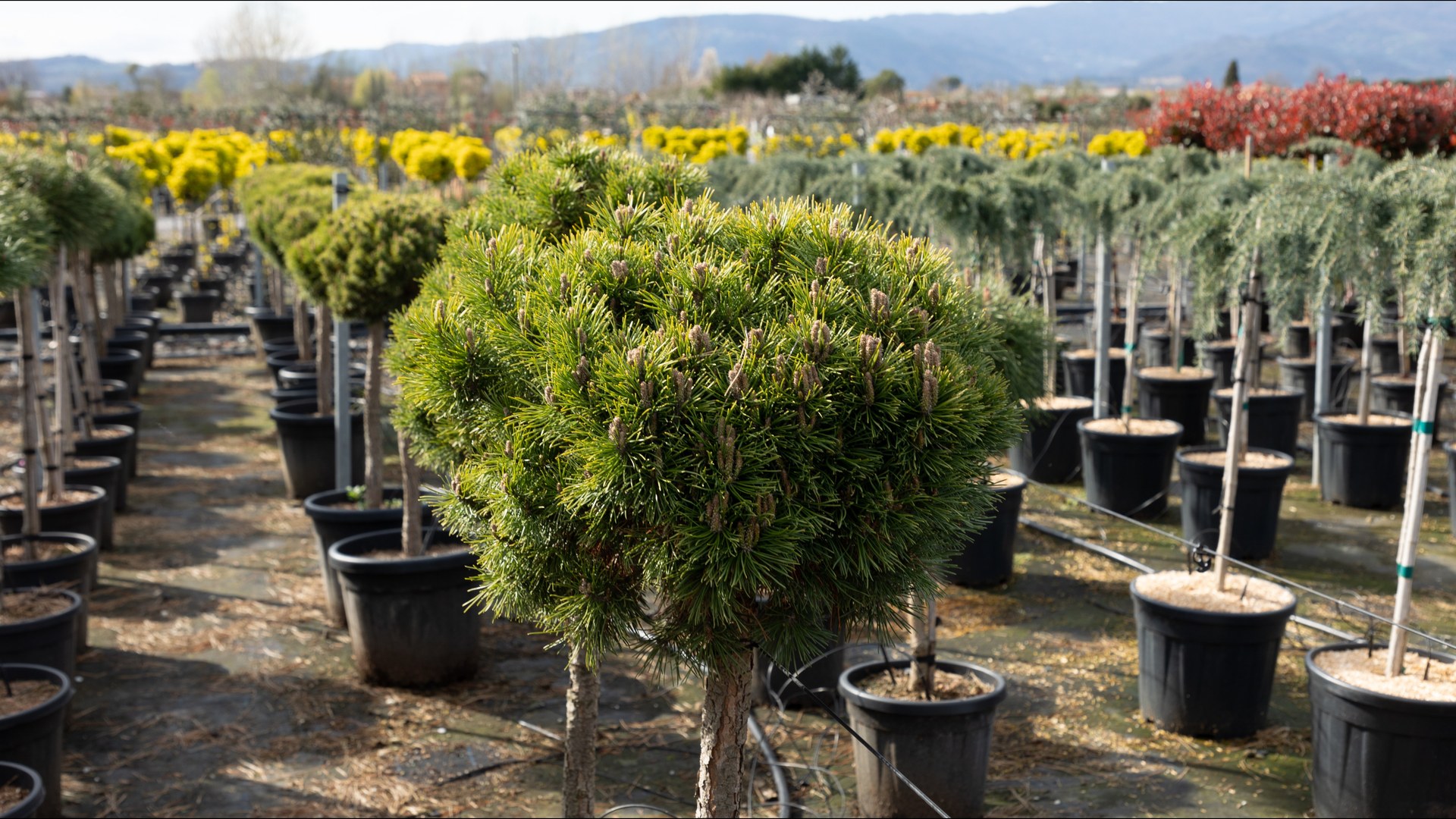
_Pinus_ spp.: the highest cold hardiness in Vivai Reali’s conifer range. Reliable across all Central and Eastern European climates, including the continental interior conditions of north-eastern Poland, the Baltic states and the Czech Bohemian highlands. Applications: naturalistic planting, windbreaks, public green space, rural landscape schemes.
_Juniperus_ spp. (Zone 3–4): exceptional cold hardiness. Upright columnar forms for formal compositions and architectural accent; spreading forms for ground cover and low-maintenance urban green space. Tolerant of pollution and compacted soils, practical for urban environments in cold-climate markets.
Zone 4 Species (-34°C)
_Taxus baccata_ (Zone 4, -34°C): the formal hedging and topiary reference species. Hardy across the vast majority of Central and Eastern European B2B markets. Taxus baccata‘s cold hardiness combined with its tolerance of shade, poor soils and heavy pruning makes it the go-to species for long-term landscape quality in the region.
Available in hedging formats and as trained topiary: cones, pyramids, columns, lollipop standards.
Zone 6 Species (-23°C)
_×Cupressocyparis leylandii_ (Zone 6, -23°C): the fastest-growing conifer screening species in commercial production. Suited to the Czech Republic, Slovakia, Hungary, Romania, southern Poland, Austria and southern Germany. Dominant species for fast-establishing privacy screening in residential development across the region.
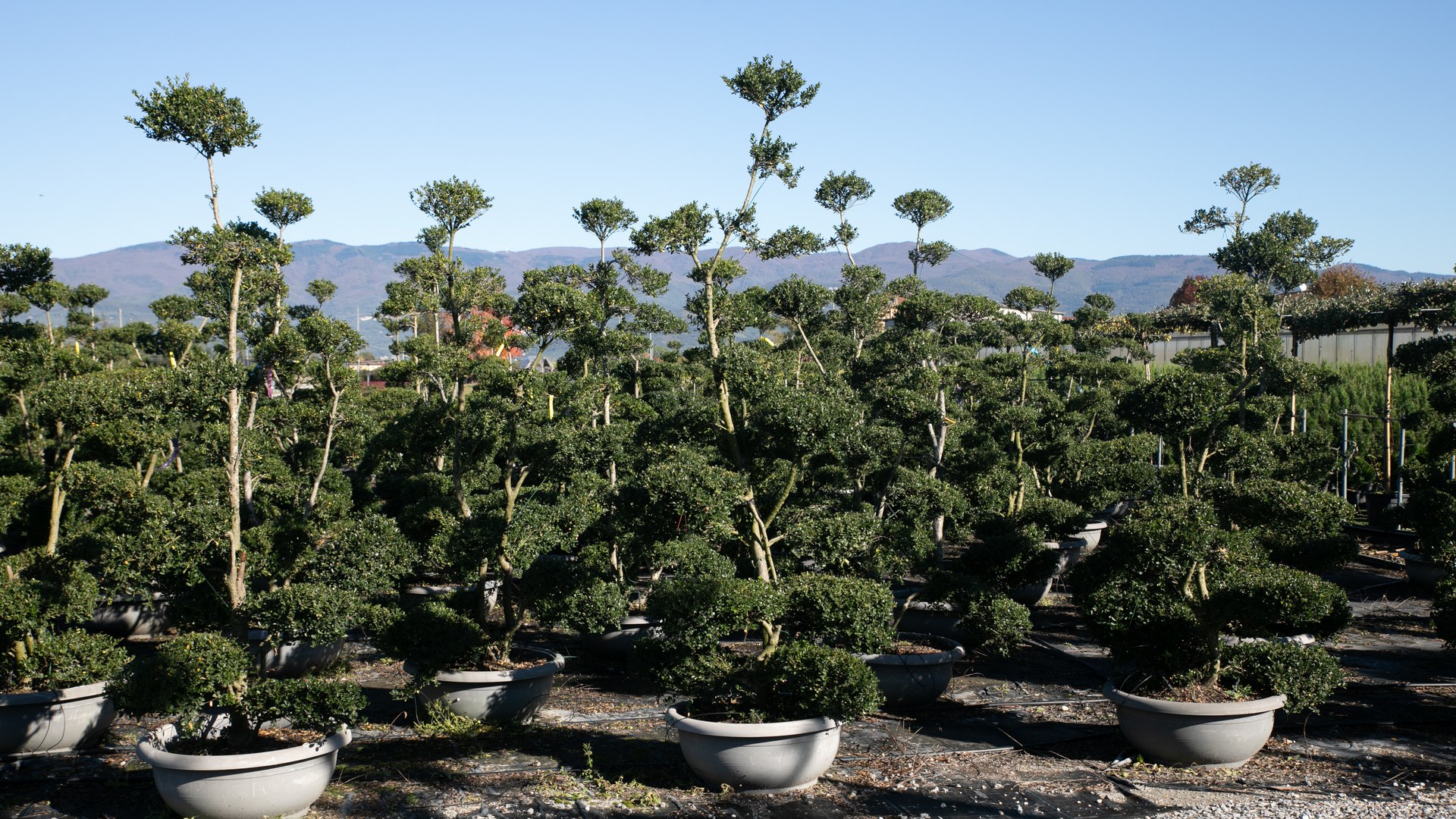
_Ilex crenata_ (Zone 6, -23°C): the established Buxus alternative for compact topiary and clipped hedging. Immune to Cydalima perspectalis (box tree moth), which has spread across Central Europe. Same compact habit and pruning response as Buxus, without the plant health management overhead. Increasingly specified by garden centres and landscaping companies that have reduced Buxus exposure.
_Elaeagnus ebbingei_ (Zone 6, -23°C): robust evergreen shrub with exceptional wind and salt tolerance. Suited to exposed positions, coastal environments and urban sites. Varieties Compacta and Vivileg available.
Zone 7 Species (-18°C)
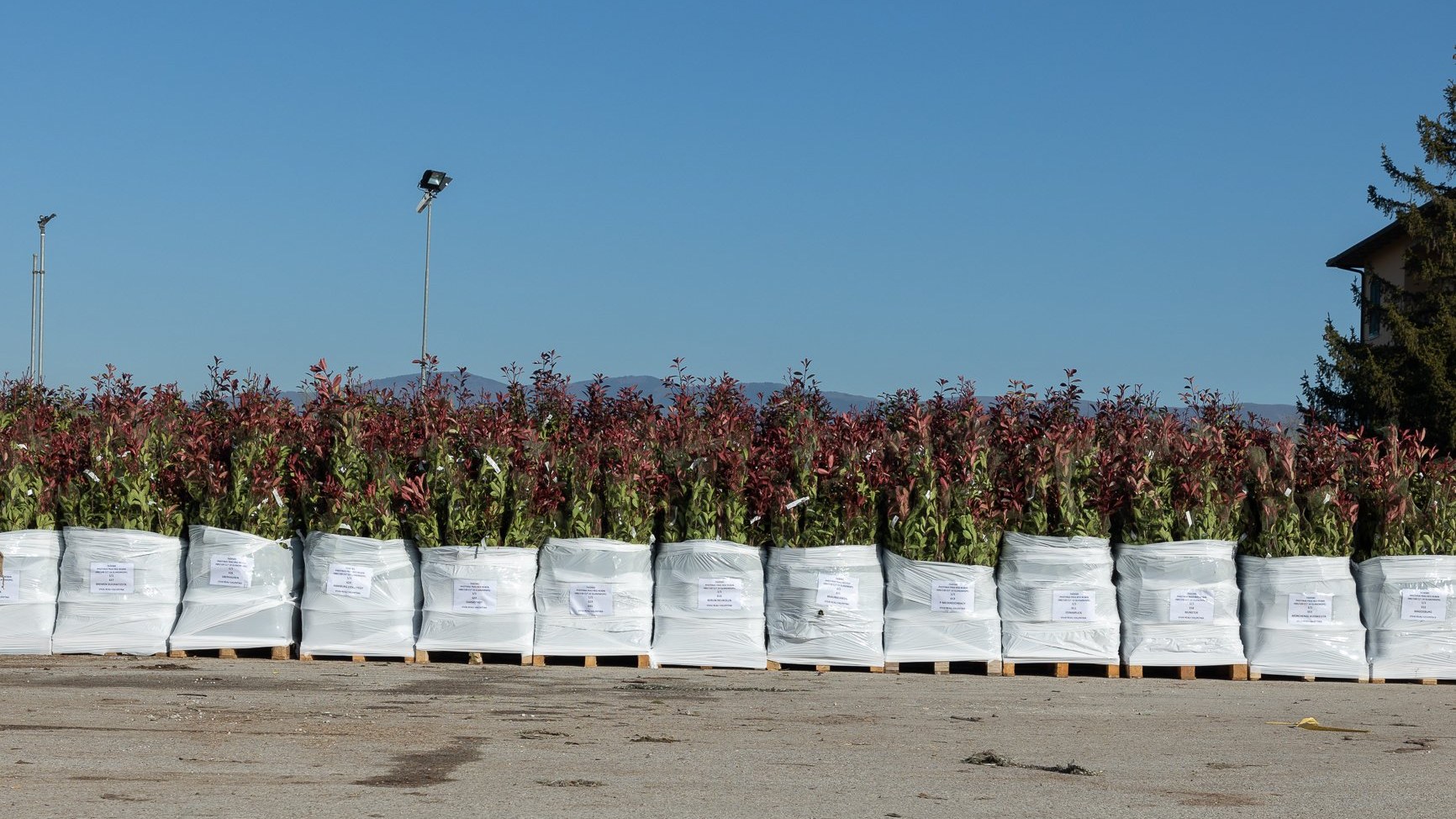
_Photinia fraseri_ (Red Robin, Compacta, Chico, Little Red Robin; Zone 7, -18°C): one of the most commercially active ornamental hedging species in Europe. Bright red new growth, evergreen, excellent pruning response. Suited to the milder areas of Central Europe: Hungary, Romania, Austria, southern Czech Republic, Slovenia.
_Prunus lusitanica_ (Zone 7, -18°C), Portugal Laurel. Broad-leaved evergreen hedging with a refined appearance: dark glossy foliage, upright habit. Suited to the same Zone 7 markets as Photinia. Strong demand from garden centres and residential landscaping.
Bulk Export: Production and Logistics
Production: 90–95% of Vivai Reali’s catalogue is produced in-house across 30 hectares in Pistoia. The remaining 5–10% from a selected network of partner nurseries at equivalent standards. Supply consistency across repeat orders.
Intra-EU logistics: shipments to EU member states in Central and Eastern Europe follow the EU plant passport system, with no phytosanitary certificate or border inspection requirement.
Lead time: 1–2 weeks from order confirmation. Extended during spring and autumn peak.
Incoterms: EXW / FCA (ex-nursery, Pistoia). DAP for established partner accounts.
Loads: full and partial loads accommodated. Volume and minimum order discussed per enquiry.
Certifications: MPS certified.
Frequently Asked Questions
Which Vivai Reali ornamental plants are the most cold-hardy?
The hardiest are Pinus spp. (Zone 2–3, down to −46/−40°C) and Juniperus spp. (Zone 3–4, down to −40/−34°C). They are followed by ×Cupressocyparis leylandii, Ilex crenata and Elaeagnus ebbingei (Zone 6, −23°C) and, for milder areas, Photinia fraseri and Prunus lusitanica (Zone 7, −18°C).
How do I match a species to the climate zone of my market?
Compare the species’ USDA hardiness zone with the zone of the planting site: most of Poland and the Baltic states are Zone 4 (−34°C), while Hungary, Austria and most of Germany are Zone 6 (−23°C). Choose species rated for the same zone or a colder one.
Do shipments from Pistoia to Poland or Romania need a phytosanitary certificate?
No. Shipments to EU member states in Central and Eastern Europe travel under the EU plant passport system, with no phytosanitary certificate and no border inspection.
What is the lead time for an export order?
Vivai Reali’s standard lead time is 1–2 weeks from order confirmation, extended during the spring and autumn peaks. Standard Incoterms are EXW/FCA ex-nursery Pistoia; DAP is available for established partner accounts.
Does Vivai Reali accept partial loads, and is there a minimum order?
Vivai Reali accommodates both full and partial loads. Volumes and minimum order quantities are agreed per enquiry.
Can I get support choosing species, formats and quantities?
Yes. Vivai Reali’s staff are available for information and support on availability, formats, documentation and shipment planning. For enquiries and quotes: contact us.
→ View Stock List: cold hardy species available now